Creators often publish across several platforms because each service reaches people in a different context. A short video can introduce an idea, a longer video can explain it, a newsletter can add references, and a membership post can offer supporting files. The same subject does not need to become an identical upload everywhere, but it also does not need to be rebuilt from scratch. A practical strategy keeps the central idea while changing the presentation and access setting for each audience. The claim that 96% of creators use two to four platforms cannot be verified from a named, reliable report and should not be treated as an industry benchmark.
Creator Post Formats and Access Levels Across Platforms
A tutorial may become a short demonstration, a detailed YouTube video, a written checklist, and a member-only project file. Useful adaptation goes beyond changing dimensions. The creator may rewrite the opening, add captions, change the pace, or provide a different call to action. There is no universal rule requiring TikTok or Reels posts to last 15–60 seconds or YouTube videos to last 10–20 minutes. Length should follow the topic, current platform limits, and audience response. Public content is not automatically “raw,” and paid content does not always need expensive production. Members may value early access, complete notes, downloads, archives, or direct discussion.
Common access settings include:
Public access: Anyone can view the post.
Free-member access: A user joins without paying.
Paid access: Only paying members or selected tiers can view it.
Early access: Members receive the post before its public release.
One-time purchase: A user buys one post or product without a recurring subscription.
Patreon currently supports these access options. Substack supports free and paid subscriptions and allows free previews before a paywall.
Reasons for Adapting Creator Content to Platform Algorithms
Creators do not need to redesign every post solely to “please the algorithm.” Adaptation is useful because audience intent, viewing environment, interface, and discovery systems differ across platforms.
Algorithmic Distribution Dynamics
TikTok recommendations use user interactions, content information, and user information. Watch time can matter, but TikTok does not publish a rule stating that every successful post must hook viewers within exactly three seconds.
Instagram Reels are ranked through personalized prediction systems. Instagram also favors original material in recommendations and may replace a duplicate with the original version. This is aimed at unoriginal reposting, not at preventing a creator from adapting their own work.
YouTube recommendations consider relevance and long-term viewer satisfaction. Audience retention is useful, but Average Percentage Viewed is not the only factor. Viewer history, topic relevance, satisfaction signals, and audience performance also matter.
Substack and Patreon should not be described as platforms without recommendation systems. Substack has a discovery feed, Notes, recommendations, and category surfaces. Patreon has personalized discovery through Explore, public posts, Quips, and feed features.
Mitigating Duplicate Content Penalties and Creator Burnout
There is no general cross-platform “duplicate content penalty” for a creator publishing their own authorized video on several services.
YouTube’s reused-content policy concerns monetization of channels that republish material without meaningful original contribution. Instagram’s originality rules focus on recommending original work over copies. Neither establishes a universal penalty for distributing your own work across platforms.
Identical cross-posting can still be inefficient. Followers may see the same message repeatedly, and a file designed for one interface may be difficult to use elsewhere. Change the post only where the audience gains something: clearer captions, better framing, more context, or a suitable access level.
The claim that repurposing saves 70% of production time is unsupported. The actual saving depends on editing, research, captioning, approvals, and platform management.

The 3-Tier Audience Conversion Funnel: From Free Short-Form Content (TikTok/Reels) to Paid Exclusives (Patreon/OnlyFans)
The three-tier funnel is a planning model, not a required route. Audiences may also discover creators through search, podcasts, collaborations, newsletters, or paid communities.
Because each path can lead to a different access level, viewers should first decide whether they want public previews, free-member content, or paid exclusives. The site guidance on 주소온길 can be useful for selecting a platform that matches that preference.
This prevents users from joining a service simply because a creator is present when the content they want is limited to a different membership tier or purchase method.
Tier 1: Discovery - Top of the Funnel (Maximizing Reach)
Platforms: TikTok, YouTube Shorts, Instagram Reels, X, public Patreon posts, and Substack Notes.
Formats: Short demonstrations, excerpts, public commentary, infographics, or previews.
Access Level: Public.
Objective: Introduce the creator’s subject and provide a clear next step.
Discovery content does not have to be under 60 seconds. It should deliver a complete idea rather than withholding the answer to force a click.
Tier 2: Nurturing - Building Trust (Establishing Authority and Credibility)
Platforms: YouTube, podcasts, free newsletters, free Patreon memberships, and creator websites.
Formats: Tutorials, interviews, case studies, transcripts, and detailed articles.
Access Level: Public, free subscription, or account registration.
Objective: Help the audience evaluate the creator’s reliability.
An email subscription provides direct delivery, but it does not remove dependence on deliverability rules, software providers, or platform policies.
Tier 3: Conversion - Monetization & Exclusivity (Maximizing Creator Revenue)
Platforms: Patreon, paid Substack publications, private communities, courses, and other lawful membership services.
Formats: Extended lessons, downloads, archives, early access, workshops, or member discussions.
Access Level: Paid membership, selected tier, or one-time purchase.
Objective: Provide a specific benefit that justifies payment.
Paid members should not automatically be described as the “top 1% of superfans.” Conversion and retention vary. A sustainable offer depends on clear benefits, transparent billing, and realistic commitments.
Comparing Post Format Strategies and Access Levels Across Popular Platforms
The table below is a flexible starting point rather than a universal schedule.
PlatformPrimary Post FormatAccess LevelStrategic ObjectivePublishing CadenceTikTok / ReelsVertical or square videoPublicDiscovery and audience testingBased on sustainable capacityYouTube MainLong-form, Shorts, live, or community postsUsually public; memberships may add gated benefitsSearch, recommendations, education, and entertainmentBased on quality and demandSubstack / NewsletterText, audio, video, Notes, and emailFree, paid, preview, or founding-member accessDirect subscriber relationship plus discoveryConsistent with the publication’s promisePatreon / DiscordPosts, audio, video, files, livestreams, and community accessPublic, free-member, or paid tierMembership benefits and communityDetermined by promised benefitsPosting one to three times per day or one to two long videos per week may work for some creators, but those figures are not platform requirements.
Measuring and Optimizing Multi-Platform Performance
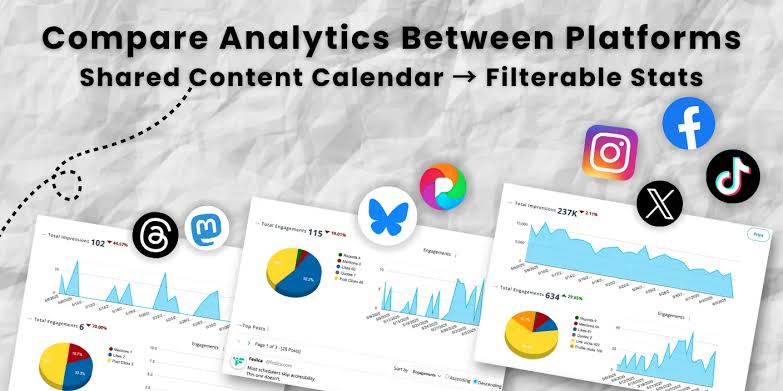
Measure each platform according to its role. Discovery posts can be judged through qualified views, profile visits, and link clicks. Trust-building content may be evaluated through returning viewers, subscriptions, saves, or completed resources. Paid offers require attention to conversion, cancellations, refunds, fees, and retention.
1. Implementing UTM Tracking Codes and Google Analytics
UTM parameters can identify which tagged campaign link sent traffic to an owned website. Google Analytics recommends using source, medium, campaign, and other relevant parameters consistently.
UTM links cannot always trace one viewer through every step to a Patreon or Substack payment. Attribution may break when users change devices, open links inside apps, reject analytics storage, return through an untagged link, or pay on another domain.
Use separate links for major campaigns and compare website analytics with the membership platform’s reporting.
2. Evaluating Audience Lifetime Value (LTV)
The calculation “$10 per month × 12 months = $120” represents gross subscription revenue over 12 months, not complete lifetime value.
A useful estimate should consider platform fees, payment processing, refunds, discounts, delivery costs, and observed retention. LTV is a planning estimate, not guaranteed revenue.
Changing post formats and access levels helps creators present the same subject appropriately across platforms. The goal is not to chase a fixed algorithm formula or force every audience through the same funnel. Preserve the central value, adapt only what improves the experience, and reserve paid access for benefits that are clear before purchase. Use current official platform documentation and first-party analytics instead of unsupported formulas. Take Action Today: Select one useful piece of existing content. Create one public discovery version, one deeper free version, and one paid addition only if it provides genuine extra value. Measure the results before making the workflow permanent.